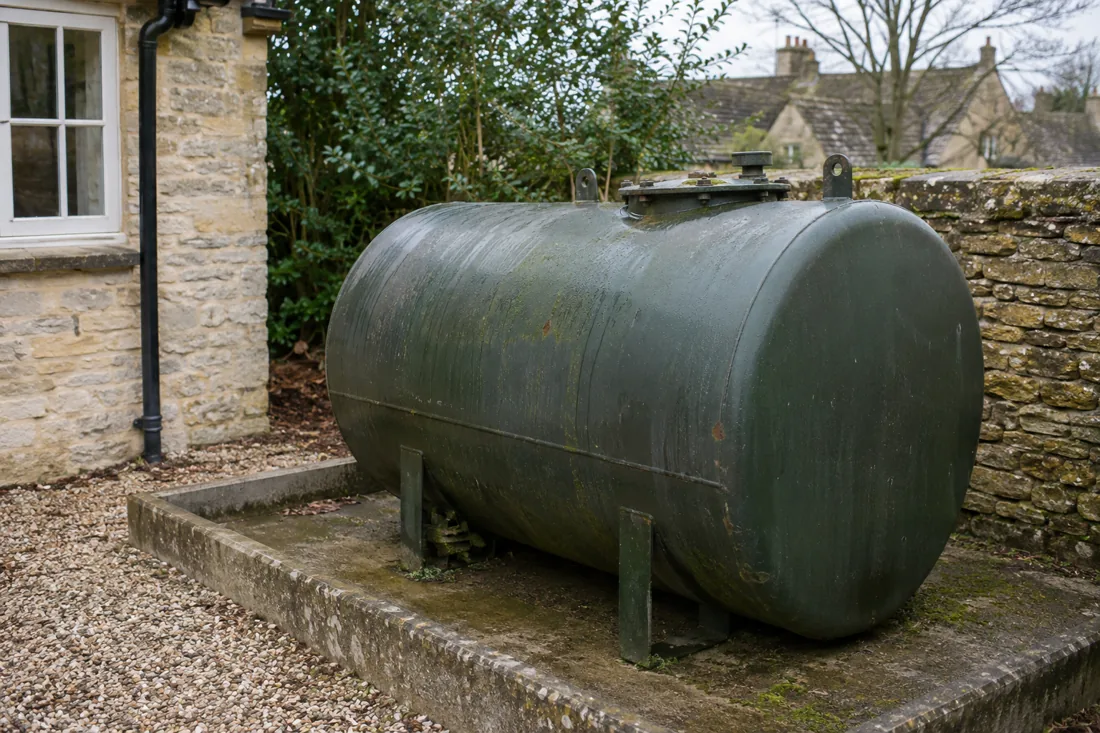
When Removal Is The Right Job
An unused tank can get in the way of an extension, a garden project or a change of heating system. Oil tank removal in Oxfordshire starts with understanding whether the tank is genuinely redundant, still supplies an appliance, or needs to be replaced without a long interruption to heating. Those are different jobs, with different arrangements for the fuel and connections.
A tank that looks empty is not ready to lift or cut. Residue can remain below the outlet and in seams, together with water and sludge. Give us the history you know, including the last delivery, any leak concerns and whether the boiler has already been replaced. An unknown history is a reason for assessment, rather than an assumption that the tank is harmless.
Choose A Removal Scope
For an accessible above-ground tank, the choice is usually between taking it out whole and reducing it into manageable sections after preparation. A narrow side gate may favour sectional removal, while a clear vehicle route can make a whole-tank lift practical. Tank material, weight, condition and the stability of its supports all affect that decision.
Below-ground tanks need a different investigation. Excavation may expose buried services or contaminated ground, and leaving a cleaned tank in place creates a permanent record to retain. Use our underground tank guide before treating a buried tank as an ordinary garden removal. If heating will continue, read about replacement as a coordinated project.
From Isolation To A Clear Footprint
The work plan should identify the connected boiler or plant, remaining fuel and redundant pipework before equipment arrives. A competent contractor isolates the system, recovers liquids, cleans the tank and assesses the safe method of dismantling or lifting. Protecting nearby drains and surfaces belongs in that plan, along with control of access around the work.
Cold cutting can avoid the flame associated with hot work, but it does not make an unprepared tank safe. HSE guidance on tanks and drums explains the risks from residues and the need for preparation. Cutting is specialist work, including when the tank has been unused for years.
Agree what remains afterwards. Removing the tank does not automatically include breaking out a concrete base, digging up every buried oil line or restoring paving. The remote fill point also needs attention so a future delivery cannot enter a disconnected system by mistake.
What Happens To The Remaining Oil
A useful estimate of the oil level helps size the recovery equipment, but suitability for reuse needs checking. Clean-looking fuel may have water underneath it. A receiving tank must be suitable and have enough available capacity before any transfer is agreed.
If there is no continuing oil use, ask for fuel uplift to be itemised separately from tank dismantling. Water, sludge and unusable fuel need an appropriate waste route. Do not plan to empty the tank yourself, pour residues away or mix the contents into another container to simplify collection.
Access And Cost Drivers
Send a wide photograph showing the whole tank and its supports, close views of the label and connections, and a sequence from the road to the tank. Include gate widths, steps, low branches, overhead cables and any route through a building. Tell us whether a driveway is shared or whether parking needs permission.
The quote depends on tank size and material, the quantity and condition of liquids, dismantling time, lifting arrangements and the distance equipment must travel from a safe parking position. A fragile lawn or restricted village lane may change the method. Base removal, contaminated ground and reinstatement should be listed as separate allowances or exclusions rather than left implicit.
Records To Keep After Removal
Ask who will carry the waste and where it will be accepted. Request a completion description identifying the tank removed, the handling of its contents and the pipework left safe. Waste transfer or consignment documentation depends on the material and the applicable movement, so the contractor should explain what records apply to your job.
Keep the quotation, invoice, photographs and any relevant testing records with the property file. A gas-free document has a particular scope and purpose, and is not a universal certificate that every removal receives. Commercial sites should also agree method statements, isolation responsibilities and any lifting plan before work starts.
Questions About This Service
Can A Tank Be Removed Without A Replacement?
Oil tank removal can be booked on its own when oil heating has ended or the tank is redundant. Confirm whether any appliance still depends on it and what will happen to usable fuel. The scope should cover the old fill point and supply connections as well as the tank itself.
Does Removal Include The Concrete Base?
Concrete base removal is a separate part of the scope unless it is expressly included. Some owners retain a sound base for another use, while others need the area cleared for building work. Send a photograph and explain the intended finish so demolition, disposal and reinstatement can be priced together.
Make The Enquiry Useful.
Send the postcode, tank details and access information. Include what you know about the oil remaining and any suspected leakage.
Enquire About Oil Tank Removal