Clean For A Reason
Oil tank cleaning deals with deposits and contamination that interfere with storage or fuel delivery. Water, sediment and sludge can accumulate at the bottom, below the point where the system draws fuel. A heating problem may be the first sign, but it does not prove the tank is the cause.
Repeated filter blockages, hazy fuel or a boiler that cuts out are useful details to report. They should be considered alongside appliance and fuel line checks. For Oxfordshire homes, landlords and commercial premises, a targeted assessment helps distinguish a tank clean from a boiler repair, water removal or a failing tank that needs replacement.
Water Removal, Cleaning Or Replacement?
Where the fuel is otherwise suitable and free water is the main issue, a contractor may assess whether water can be removed without a full clean. Access to the low point and the tank's design affect that option. Sludge or recurring contamination can justify emptying and cleaning rather than a limited water uplift.
Cleaning does not mend a split vessel or restore the strength of corroded steel. If a tank has distorted, leaked or lost support, the first decision is whether it can remain in use. Photographs of the outside matter even when the complaint concerns the contents, and a contractor may recommend replacement instead of a clean.
A dirty tank also needs a cause considered. Damaged caps, seals or fittings can allow water in, while the surrounding enclosure may hold debris or rainwater. Removing contamination without investigating how it entered can leave the owner with the same problem later.
What The Cleaning Programme Includes
The contractor first assesses the vessel, the stored fuel and access for equipment. The appliance or plant supply is isolated under an agreed shutdown plan. Suitable fuel can be moved into temporary holding while water, sludge and deposits are separated for an appropriate waste route.
The cleaning method depends on tank material, condition, openings and the deposits found. Suction and mechanical methods may be used, with washing only where suitable for that vessel and the planned return to service. A small domestic tank and a large commercial storage vessel should not be assumed to need the same equipment or access arrangements.
Where work can be completed from outside, entry should be avoided. A tank is not a space for an owner or unprepared worker to climb into. HSE confined space guidance is relevant where dangerous atmospheres or other specified risks are present, and specialist planning is needed if entry cannot be avoided.
Keep Usable Fuel Separate
The amount of oil left affects holding capacity and the time involved. Do not assume that a full tank must all be discarded, or that all recovered fuel can be returned. Condition checks establish what can reasonably be retained and whether further treatment or testing is appropriate.
Filtration can help remove particles, but it is not a promise to correct every kind of fuel deterioration. For a critical commercial system, tell the contractor about the equipment's fuel specification and any laboratory results. Agree what evidence will support return to use, rather than treating a visual check as a laboratory certificate.
Ask whether replacement fuel supply is included or needs arranging separately. If a delivery is required after cleaning, coordinate it with the contractor's completion plan. An unplanned delivery into a tank still being worked on creates avoidable risk.
Access, Downtime And Cost
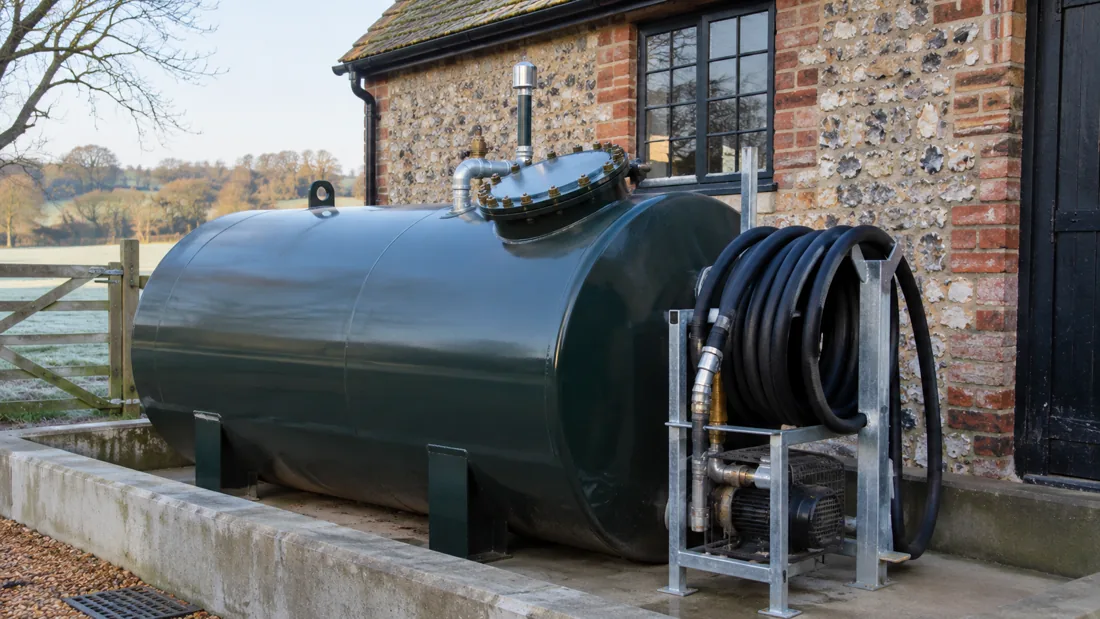
Send the tank label, overall photographs, close views of accessible openings and the route from the parking area. Tell us about narrow village access, steps, locked compounds and lawns that need protection. Include the estimated oil level, recent delivery history and details of any filter or boiler faults.
For business sites, identify permit requirements, occupied hours and the person authorised to isolate the supply. Heating or equipment may be unavailable while fuel is held outside the tank. Temporary arrangements need assessing and pricing, rather than being treated as an automatic part of a clean.
Cost follows the volume handled, contamination level, accessibility, waste quantities and the method selected. Fuel analysis, difficult deposits and specialist access can add work. Ask whether the quotation covers investigation of ingress points and any replacement fittings, or only removal of the material already inside.
What To Record Afterwards
Request a description of the clean, findings about the tank and contents, and any recommendations about continued use. The contractor should explain the waste documentation applicable to recovered liquids and residues. Classification depends on the material, so not every item leaving a site should be described in the same way.
Keep any fuel test results distinct from the cleaning record. If the cause was water ingress, retain the repair details and arrange follow-up checks. A maintenance plan based on condition is more useful than assuming every tank needs a clean on the same calendar date.
Questions About This Service
Will Cleaning Stop My Boiler Cutting Out?
Oil tank cleaning may help if contaminated fuel is causing the boiler to cut out, but similar symptoms can have other causes. Tell the contractor about recent servicing, blocked filters and any fault diagnosis. The tank and fuel should be assessed before promising that cleaning will resolve an appliance problem.
Can Oil Go Back Into The Tank After Cleaning?
Oil can sometimes go back after cleaning if it remains suitable and has been kept separate from waste material. The decision depends on water, sludge and fuel condition. Agree the assessment, filtration and any testing needed before work begins, together with how a shortfall in usable fuel will be handled.
Make The Enquiry Useful.
Send the postcode, tank details and access information. Include what you know about the oil remaining and any suspected leakage.
Enquire About Oil Tank Cleaning